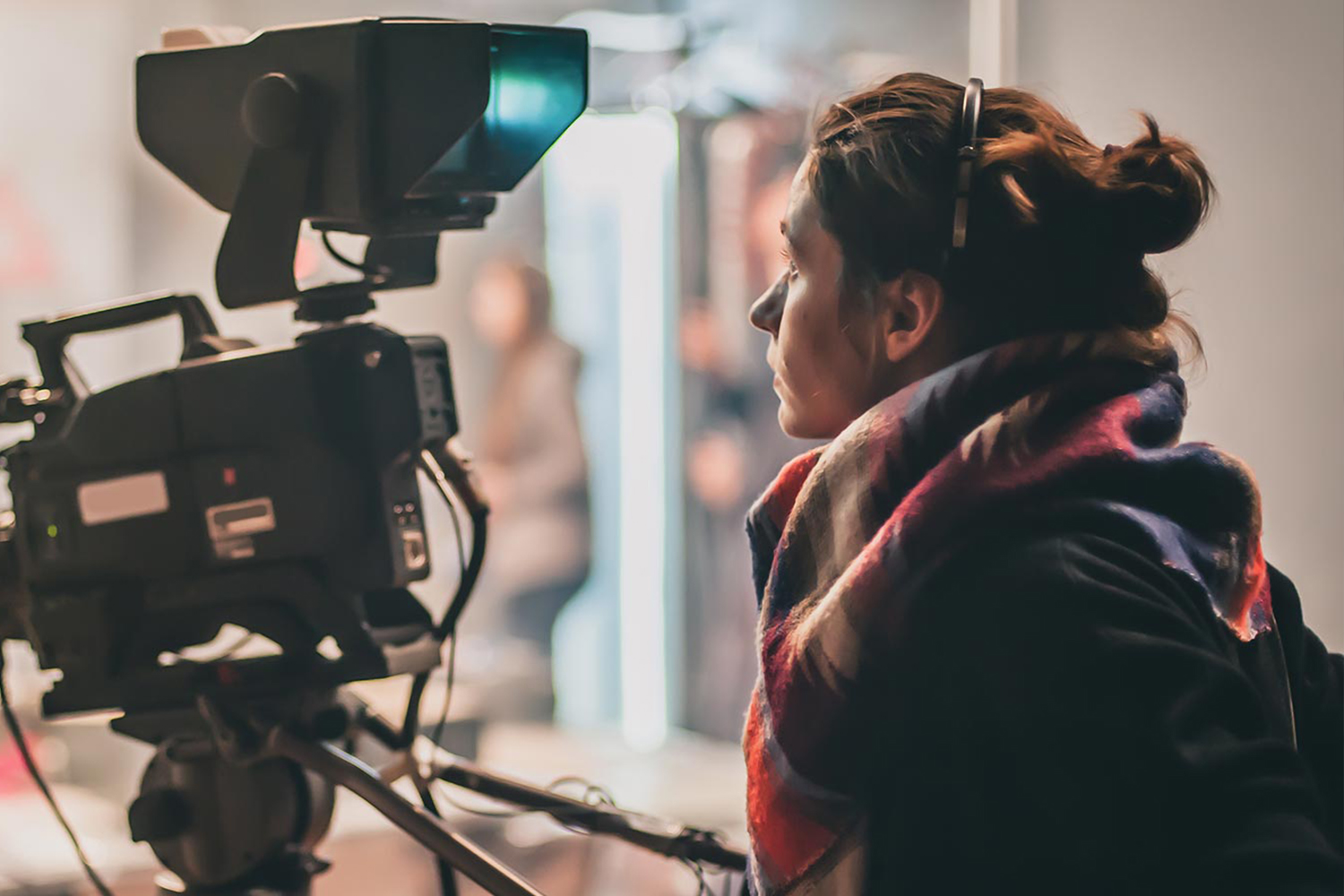
Digital Filmmaking and Media Production Concentration Overview
The Digital Filmmaking and Media Production concentration is designed for aspiring filmmakers, video editors, and content creators who want to master the art and science of effective visual storytelling.
This concentration gives you hands-on experience with every stage of media production, from script development to field production to editing. You’ll work with industry-standard tools to build a professional portfolio that showcases your creative and technical abilities.
Unlike standalone film programs, the Pace online Master of Arts in Communications and Digital Media situates production within the broader context of communications strategy and digital media. That means you’ll develop the creative expertise of a filmmaker alongside the strategic thinking that sets exceptional media professionals apart.
Pace University was ranked as one of the top colleges to study filmmaking in New York by CEOWORLD Magazine. When you study filmmaking at Pace, you’re studying at a program that’s earned its reputation.
Get Started
Request Information
To learn more about the online Master of Arts in Communications and Digital Media program, fill out the fields in this form to download a free brochure. If you have any questions at any time, please contact an enrollment specialist at (914) 758-1080.
Core Skills You’ll Master
Our online master’s in media and communication provides comprehensive training in visual storytelling, production techniques, and post-production workflows in addition to communications theory and digital media strategy. Students gain skills in:
Narrative scriptwriting for film, television, and digital platforms
Video field production and camera operation
Professional video editing and post-production
Documentary filmmaking and storytelling
Media production management
Digital content strategy
Sound design and audio production
Lighting techniques and visual composition
Project management for media productions
Where This Concentration Takes You
Graduates of the Digital Filmmaking and Media Production concentration are prepared for production roles in entertainment, media, corporate communications, and advertising sectors. According to Lightcast labor market data, professionals in this field can pursue roles with above-average earning potential, such as:
Digital Filmmaking and Media Production Curriculum
To complete the concentration, you’ll choose five of the following courses:
This course will examine theories and practices pertaining to digital communications leadership. It will focus on leadership styles and skills in the field of digital communication that one who aims at becoming an effective leader needs to develop in the 21st century. The course will also reflect on traditional leadership models and compare them to modem leadership in the context of the multigenerational workplace, social media, and empowered followership. One of the critical aspects of the course will be creating a TED talk that will allow students to demonstrate their leadership potential by creating and delivering speeches on selected topics.
This workshop-intensive creative writing course introduces students to principles of narrative scriptwriting for visual media. Both linear (e.g. film, television, and linear web) and nonlinear interactive forms are covered. It establishes that a script is a plan for production and that visual media are identifiable different from print media. This course introduces the script formats for several visual media and demands regular writing practices in these formats: TV commercials, PSA, corporate, training, TV drama/sitcom, and interactive media.
This course introduces students to the basics of media innovation and experimentation in the digital age. The course will trace the causes and arc of changes in the media industry; bring in guest speakers who exemplify these changes; examine case studies of new media organizations in an ever-changing environment. Students will work in teams to develop their own proposal for media innovation.
Ethics is a prominent issue in any career, but the media field, in particular, needs examination. In this course, students will focus on the moral and ethical issues that characterize the communication industry. Special attention will be paid to current events related to the ethics of the media workplace and the professions.
The course will teach the basic principles of video production. It offers a conceptual introduction and practical experience on shooting video that is steady, in focus, well-framed, and, most importantly, tells a story.
The major goals of this course are to familiarize students with current production organization and procedures, while perfecting basic production skills. By using a hands-on and laboratory/lecture approach, we will be able to produce a wide variety of projects for all platforms. Weekly guest speakers will provide insights and education about various topics in corporate production.
The Producing the Documentary course is a well-regarded, award winning program at Pace. It has provided opportunities for many undergraduate and graduate students to broaden their knowledge and skill set in the areas of communication, research, and production. The students start out by researching their destination, which changes every spring. During the process students will look for story, interviewees, and learn as much as possible about the issue before departure. Traveling to locations, the students will have hands-on experiences in the field, learning what it means to be part of a production team. In addition, they will also learn to solve problems and adapt to changes in the story as it develops. Once the students come back from the trip, they will have to organize their footage and start putting the story together. The film then premieres in a local theatre.
The course will provide a working knowledge of the role of the executive and line producer in pre- through post-production on a film, television, or new media project. Included in the process will be production planning, budgeting, scheduling, business considerations, and post-production process management.
This course is designed to provide students with detailed insight into the structures, processes, and controversies surrounding media organizations in the United States.
The course focuses on the practicalities and aesthetics of editing. It explains the 50 types of cuts, what the editor does and how the editing process works and well as the history of editing.
This course will focus on the performance and responsibilities of various media with regard to legal standards. Within this framework students will gain a basic understanding of various ethical theories and legal issues along with their application to today’s media and to the careers they wish to pursue.
Students will become adept at navigating and utilizing the fast-changing world of web, mobile, and social media, which have–in less than a decade–become the dominant means by which news is conveyed, products are marketed and ideas shared and shaped. They will learn how communication innovators–from The New York Times to NPR’s Radiolab to students startups are weaving written, visual, and audio contents across platforms to engage with audiences.
Special topics.
Your Network Starts Here, So Does Your Next Role
Pace MA in CDM alumni are working at the top of the industry at A+E Networks, NBC Sports, HBO, and leading media companies around the world. Small class sizes mean your professors know your name, your goals, and the people who can help you get there.
Full-time students can complete the program in as little as 1.5 years.
Yes, some students choose to complete the degree part time while maintaining a full-time work schedule.
Our online courses are offered in two modalities: synchronous and asynchronous. Some courses include regular Zoom meetings (either weekly or monthly), while others are fully asynchronous, meaning there are no scheduled meetings and you can complete coursework on your own time.
Students in the online Digital Filmmaking and Media Production concentration study scriptwriting, video field production, video editing, documentary filmmaking, advanced production techniques, and more. The curriculum emphasizes hands-on experience with every stage of media creation.
Have questions? to chat about our Digital Filmmaking and Media Production concentration or our program in general.
Not Sure Digital Filmmaking Is Your Path?
The Pace online MA in CDM offers another specialized concentration, as well as the flexibility to build your own. Explore the other options:
Build the strategic communications skills that PR agencies, corporate teams, and global brands are hiring for, with real client experience through student-run PR agencies.